Tree pruning in Crouch End for healthier, safer, better-looking trees
Well-planned tree pruning can make a real difference to a property in Crouch End. Whether you are looking after a garden tree that has outgrown its space, managing branches near a roofline, or keeping a business frontage tidy and welcoming, the right pruning approach helps trees stay safer, healthier, and more manageable. In a busy North London area with a mix of period homes, terraces, flats, gardens, and commercial premises, tree care often needs to balance appearance, access, neighbour considerations, and the long-term condition of the tree itself.
If you are searching for tree pruning in Crouch End, you are probably trying to solve a practical issue: too much shade, overhanging branches, reduced light, branches brushing against fences or gutters, or simply a tree that needs shaping after seasons of growth. A local service should be able to assess the tree properly, explain what can be done, and carry out the work carefully with the right methods for the species, size, and setting.
This page is designed for local homeowners, landlords, property managers, and businesses who want clear, dependable tree pruning support in and around Crouch End.
Why pruning matters for Crouch End properties

Trees in Crouch End often grow in challenging urban conditions. Front gardens may be compact, rear gardens can be enclosed by neighbouring properties, and access to larger trees may be limited by side passages, shared boundaries, or narrow streets. In these settings, pruning is not only about making a tree look neat; it is about keeping growth under control while protecting the tree’s structure and the surrounding property.
Pruning done well can help with: light levels in homes and gardens, reduced branch weight, better airflow through the canopy, safer clearance from buildings and pathways, and a tidier overall appearance. For many customers, it is also about preventing small issues from becoming expensive ones later on.
Local customers often contact a tree pruning team when they notice branches close to windows, climbing plants tangled in the canopy, low limbs blocking driveways, or a tree leaning into a shared boundary. In these cases, timely pruning is often the most practical way to regain control without removing a healthy tree unnecessarily.
Common reasons people request pruning
- Branches overhanging roofs, garages, or conservatories
- Canopies blocking daylight into living spaces or gardens
- Storm-damaged, dead, or rubbing branches
- Trees growing too close to paths, fences, or neighbouring plots
- Shape corrections after years of uneven growth
- Ongoing maintenance for managed gardens, flats, and commercial premises
What tree pruning involves
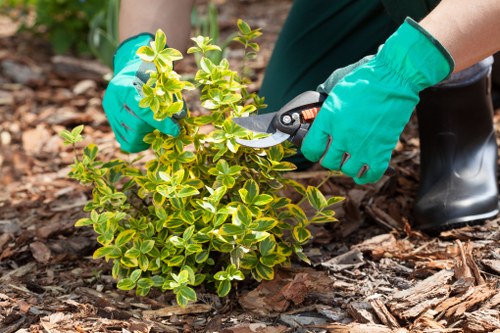
Tree pruning is a broad term that covers several different techniques. The right approach depends on the tree species, its age, health, location, and the outcome you want. A skilled local arborist will not simply cut back random branches; they will assess the tree’s form and make targeted cuts that support healthy regrowth.
Typical pruning work may include crown thinning, crown reduction, deadwood removal, formative pruning for younger trees, selective branch removal, and clearance pruning around buildings or access routes. In some cases, a tree may benefit from light shaping rather than a heavier reduction. In others, a more careful reduction can improve balance and reduce strain on particular limbs.
Good pruning should leave the tree looking natural, not butchered. The aim is to improve structure and suitability for the site, while keeping the tree healthy and stable. That is especially important in Crouch End, where mature trees can add real character to streets and gardens, but also need to fit with the realities of close neighbours and limited space.
Types of pruning commonly requested
- Crown reduction: reducing height or spread while preserving the tree’s natural form
- Crown thinning: removing selected internal branches to improve light and airflow
- Deadwood removal: taking away dead or unstable branches for safety
- Clearance pruning: creating space from roofs, gutters, walls, paths, and driveways
- Formative pruning: shaping young trees so they develop well over time
- Canopy lifting: raising low branches to improve access and visibility
Local tree pruning for homes, landlords, and businesses

Crouch End has a varied mix of properties, and each type brings different tree care needs. A family house with a rear garden may need a tree pruned to bring back light and protect a patio. A landlord may need works carried out between tenancies to keep a yard tidy and manageable. A shopfront, café, office, or community premises may need regular pruning so the frontage stays open, safe, and presentable.
For residential customers, tree pruning is often about improving everyday comfort. Garden trees that have become dense can make outdoor spaces feel smaller and darker than they should. Branches that touch roofs or fence panels can create friction, noise, and wear. For properties close to neighbours, keeping trees in check is also a courtesy that can prevent disputes over encroachment and shading.
For commercial customers, presentation and safety matter equally. Branches should not obstruct signs, lighting, entrances, or access routes. Trees around business properties often need planned maintenance rather than reactive cuts. A reliable local team can work around opening hours where needed and keep disruption to a minimum.
Who we help in the area
- Homeowners wanting to improve light, shape, and safety
- Landlords and letting agents managing gardens and boundary trees
- Property managers looking after communal outdoor spaces
- Shops, cafés, offices, and hospitality venues with visible frontage trees
- Schools, places of worship, and community buildings needing regular tree maintenance
Why a local team is useful in Crouch End
Choosing a local tree pruning service brings practical advantages. A team familiar with Crouch End understands the rhythm of the area, the style of properties, and the access issues that can affect how the job is planned. Narrow residential roads, limited parking, and shared access ways can all influence the equipment used and the time needed to complete the work efficiently.
Local knowledge also helps with sensitivity to the surroundings. Many streets in and around Crouch End have mature trees, front gardens close to pavements, and boundaries where branches may affect more than one property. A local crew is more likely to appreciate the need to work carefully, keep tidy, and communicate clearly when boundary trees involve more than one owner.
For customers, that usually means a smoother process: the tree is assessed with the local environment in mind, the work is planned around access and waste removal, and the pruning is completed with less disruption to you, your neighbours, or your business.
Local challenges we often take into account
- Limited parking for vehicles and equipment
- Narrow side access or rear garden entry only
- Shared boundaries and close neighbouring windows
- Trees near overhead lines, walls, roofs, or outbuildings
- Busy streets where traffic management and tidiness matter
How our tree pruning service works
A straightforward process matters when you are arranging tree work at home or at a business premises. Most customers want to know what will happen, how disruptive it will be, and what the finished result will look like. A clear service should begin with an initial assessment and finish with the site left neat and ready to use.
We normally start by looking at the tree, the setting, and what you want to achieve. That might include opening up light, reducing spread, lifting low branches, or removing deadwood. We also consider the tree’s condition and whether any signs of stress, disease, or poor previous cutting need to be taken into account. Once the plan is agreed, the pruning is carried out using appropriate techniques and equipment.
After the work is complete, the area is cleared of branches and debris. If you are comparing services, it is worth asking how they handle waste, access, and site cleanliness, because these practical details often make a big difference to the overall experience.
Typical service stages
- Initial enquiry and discussion of your tree concerns
- Site assessment and recommendation of suitable pruning work
- Scheduling the work at a convenient time
- Careful pruning with consideration for the tree and surroundings
- Removal or collection of cut material, where included in the service
- Final tidy-up and checking that the outcome matches the agreed plan
What is included in a professional pruning visit
Not every tree needs the same level of work, but there are some elements that customers commonly expect from a professional pruning service. These details help create confidence that the job will be carried out properly and with respect for the property.
Depending on the tree and the agreed scope, a pruning visit may include: a visual inspection of the canopy and trunk, identification of dead, weak, or congested growth, selective cutting to improve structure, removal of branches affecting buildings or access, and a tidy finish that leaves the tree in a balanced condition.
For customers in Crouch End, this can also mean working around front garden walls, basement steps, paved courtyards, shared driveways, or raised rear terraces. A local team that is used to such settings can reduce the chance of damage and make sure the work is suited to the site rather than rushed through as a one-size-fits-all job.
Useful additions to ask about
- Advice on whether the tree needs light maintenance or a more substantial reduction
- Help with deciding the best time of year for the work
- Guidance on preserving privacy while improving light
- Options for recurring maintenance visits for fast-growing species
- Clean-up and waste handling expectations
When is the best time for tree pruning?
The best time to prune depends on the species, the condition of the tree, and what you want to achieve. Some trees respond well to pruning in late winter or early spring, while others are better handled at different times of year. Flowering trees, fruit trees, and trees with heavy sap flow can all have different needs.
Timing matters because the wrong cut at the wrong season can stress the tree or reduce flowering. That is why local knowledge and species-aware pruning are important. If your tree is causing an immediate issue, such as broken limbs after wind, touching the house, or obstructing access, urgent safety work may be appropriate regardless of season.
If you are unsure when to arrange the work, ask for an assessment first. A professional can explain whether it is best to act now, wait for a better pruning window, or plan a phased approach over time.
Examples of timing considerations
- Deciduous trees may be easier to assess when leafless
- Flowering trees may need pruning after blossom to protect next season’s display
- Fruit trees often benefit from seasonal maintenance for shape and productivity
- Evergreens may need moderate, careful pruning to keep them compact
How to prepare for your pruning appointment
Preparing for tree pruning is usually simple, but a little planning helps the visit run smoothly. This is especially true in Crouch End, where parking or access can take extra thought. A clear path for equipment and a quick conversation about gates, side access, or shared spaces can save time on the day.
Before the team arrives, it helps to: move cars if requested, clear garden furniture or fragile items near the work area, unlock side or rear access if needed, and let neighbours know if branches may be near shared boundaries. If the tree is near sheds, ponds, greenhouses, or raised beds, pointing these out in advance is also useful.
A few minutes of preparation can prevent avoidable delays and make the job safer and neater. For commercial sites, it may also be helpful to schedule work outside busy periods so staff and visitors are not affected.
Preparation checklist
- Confirm access points and parking options
- Move outdoor items away from the tree where possible
- Identify any delicate landscaping or property features
- Discuss boundaries if the tree is shared or near a neighbour’s property
- Ensure someone is available to answer site-specific questions
Pricing factors for tree pruning in Crouch End
Customers often want to understand what affects the cost of pruning before requesting a visit. While exact pricing depends on the individual tree and site, there are clear factors that usually influence the amount of work involved. A transparent local service should be happy to explain these factors so you know what you are paying for.
Common pricing factors include: the tree’s size and height, how dense the canopy is, whether access is straightforward or restricted, whether climbing or specialist equipment is needed, how much waste is produced, and whether the work is a simple tidy-up or a more detailed reduction.
Location can also affect the time needed, particularly in an area with limited parking or tight access. A tree in a back garden with narrow access may take longer to manage than a tree with direct vehicle access. Similarly, a tree near a building or boundary may require slower, more careful pruning than one standing in open space.
Why quotes vary
- Different species need different techniques
- Some trees require more careful sectional pruning
- Access limitations can increase labour time
- Waste volume may be significant after heavier reductions
- Commercial sites may need additional planning or timing considerations
Why customers choose pruning instead of removal
In many cases, pruning is the smarter and more cost-effective option compared with removing a tree completely. If the tree is healthy but simply too large, too dense, or too close to structures, thoughtful pruning can solve the problem while keeping the benefits of the tree in place. That can be especially valuable in Crouch End, where mature trees contribute to the feel of a garden, street, or business frontage.
Pruning may be the right choice if you want to: keep shade under control, preserve privacy, improve the view, reduce the chance of branch contact, or make the tree more suitable for a smaller urban plot. It is also often the preferred option when a tree still has good shape and structure but needs regular maintenance.
Removing a tree can be appropriate in some cases, but it is not always necessary. A sensible pruning plan can often extend the useful life of a tree and help it sit better within the property. That is why an honest assessment matters before anyone starts work.
When pruning is especially useful
- The tree is healthy but overgrown
- Branches are causing manageable nuisance rather than severe damage
- You want to keep the tree while improving light and space
- The property layout means the canopy needs regular control
Areas covered around Crouch End
Local tree pruning support is often needed not just in Crouch End itself, but across the surrounding parts of North London where similar property types and access issues are common. Customers in nearby residential streets, terrace rows, and mixed-use areas often face the same need for careful pruning and tidy, reliable service.
Areas commonly served include nearby parts of: Hornsey, Stroud Green, Highgate, Muswell Hill, Archway, Finsbury Park, and other neighbouring North London locations. The exact service area can depend on the job type and accessibility, but the aim is to provide responsive, practical local support.
If you manage more than one property, or if you are arranging pruning for a shared garden or commercial site across different nearby locations, a local team can often help you keep the work consistent and well coordinated.
Good fit for local property types such as
- Victorian and Edwardian houses with mature garden trees
- Terraced homes with compact rear gardens
- Flats with communal outdoor spaces
- Retail, hospitality, and office premises
- Schools and community buildings with established planting
Frequently asked questions
Do I need permission for tree pruning?
Some trees may be protected by a Tree Preservation Order or be within a conservation area. If that applies, extra steps may be required before work can go ahead. A professional can help you check what is needed before pruning starts.
Will pruning harm my tree?
When done correctly, pruning should support the tree rather than damage it. The key is to use appropriate cuts, avoid over-pruning, and respect the tree’s natural growth pattern. Poor cutting can stress a tree, which is why experience matters.
How often should trees be pruned?
That depends on the species and location. Fast-growing or heavily visible trees may need regular maintenance, while slower-growing trees may only need attention every few years. Trees near buildings, paths, or boundaries often need more frequent inspection.
Can you prune trees near houses or fences?
Yes, but care is essential. Trees close to structures often need selective cutting and controlled access, especially in smaller Crouch End gardens or tight side returns.
What if the tree is shared with a neighbour?
Shared boundary trees should be handled carefully and respectfully. It is best to agree the intended work where possible and make sure the pruning remains appropriate for the tree and the property arrangement.
Can pruning help with light in my garden?
Yes. Selective crown thinning or reduction can improve daylight significantly, especially in enclosed urban gardens where trees have become dense over time.
Will the area be left tidy?
A professional service should leave the site neat and remove the cut material as agreed. This is particularly important in front gardens, driveways, and commercial entrances where presentation matters.
Book your tree pruning service in Crouch End
If a tree on your property is becoming unmanageable, blocking light, or creating concerns near a building or boundary, now is a good time to arrange an assessment. The right pruning can improve safety, maintain the tree’s shape, and make your outdoor space more usable again.
Contact us today to request a free quote or arrange a site visit. Whether you need a one-off reduction, deadwood removal, or ongoing tree maintenance, a local team can help you choose the right approach for your property and budget.
For tree pruning in Crouch End, choose a service that understands the area, works carefully around access challenges, and puts the long-term health of your trees first.
What you can expect when you enquire
- Clear discussion of the tree problem or goal
- Practical advice on the most suitable pruning method
- Consideration for access, neighbours, and site layout
- A tidy, professional finish focused on your needs
Book your service now if you want a safer, neater, and more manageable tree without unnecessary disruption.